![Mexican Loop Holster - Ballstrardt Style - 1870 era [SL-3234] - Image 10](https://www.swedesleatherworks.com/wp-content/uploads/ColorCollage-01-1.jpg)
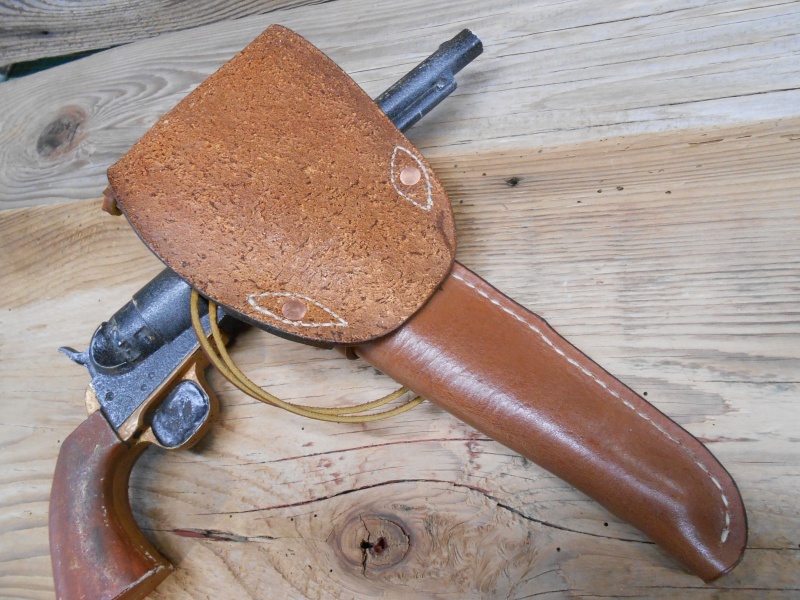
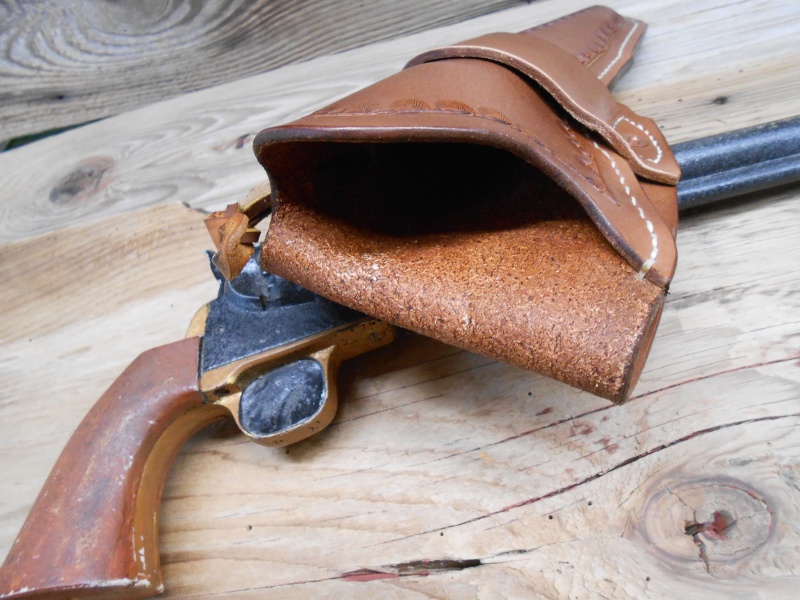
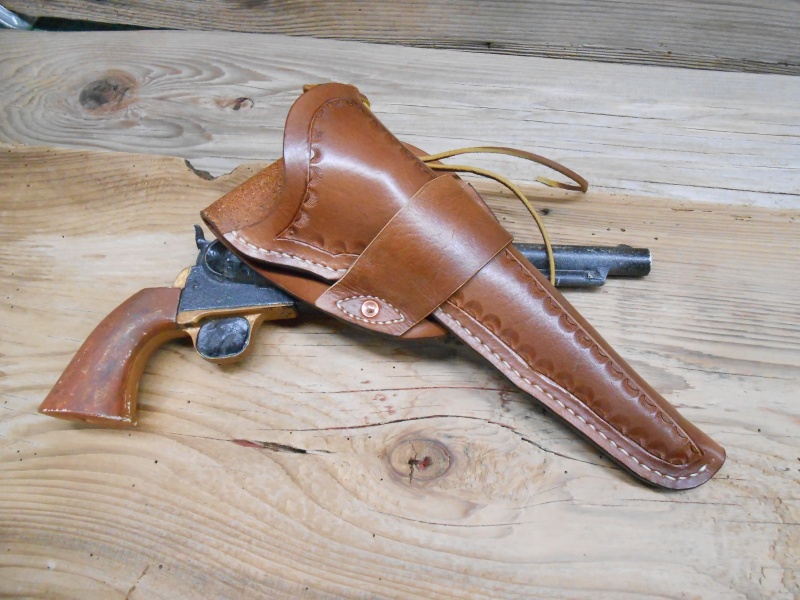
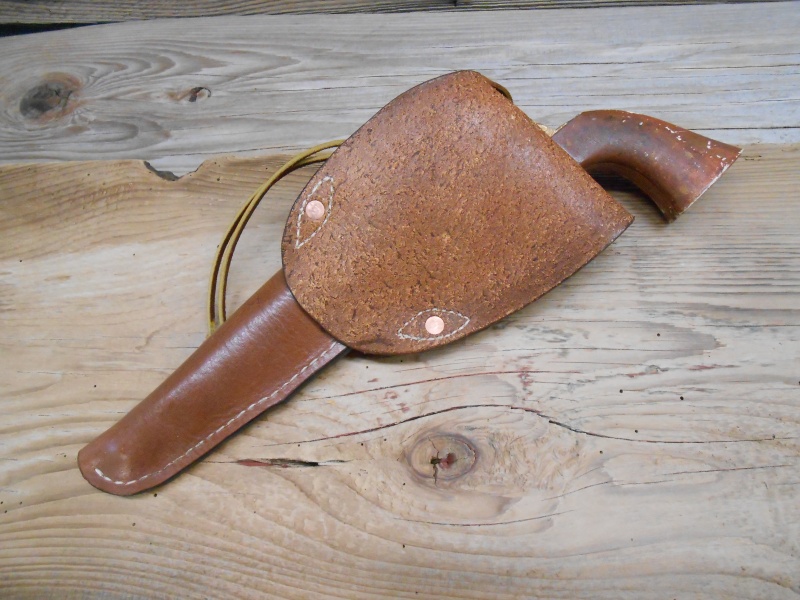
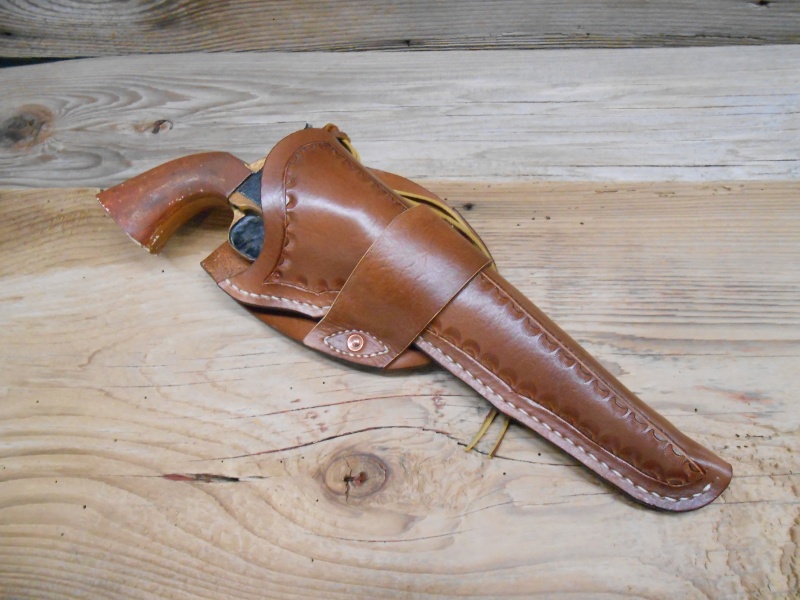
Mexican Loop Holster – Ballstrardt Style – 1870 era [SL-3234]
$92.00
These were typically made starting around 1870.
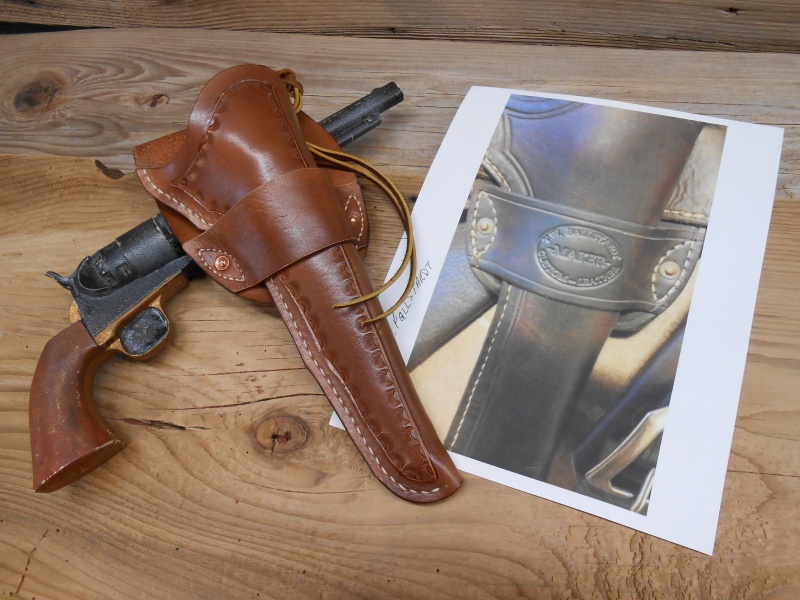
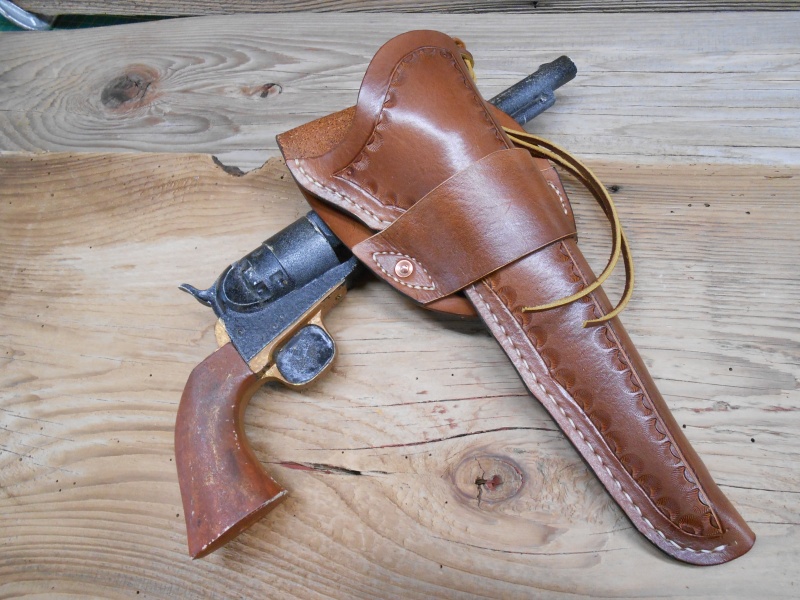
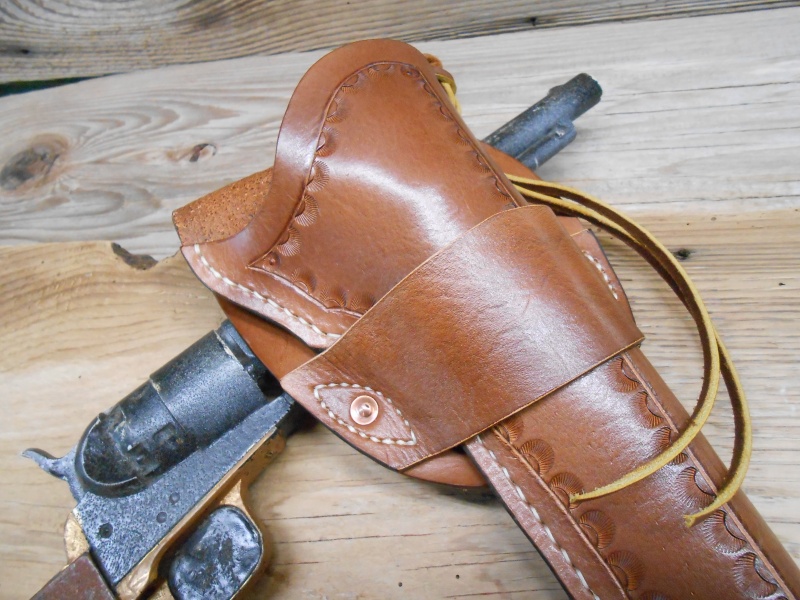
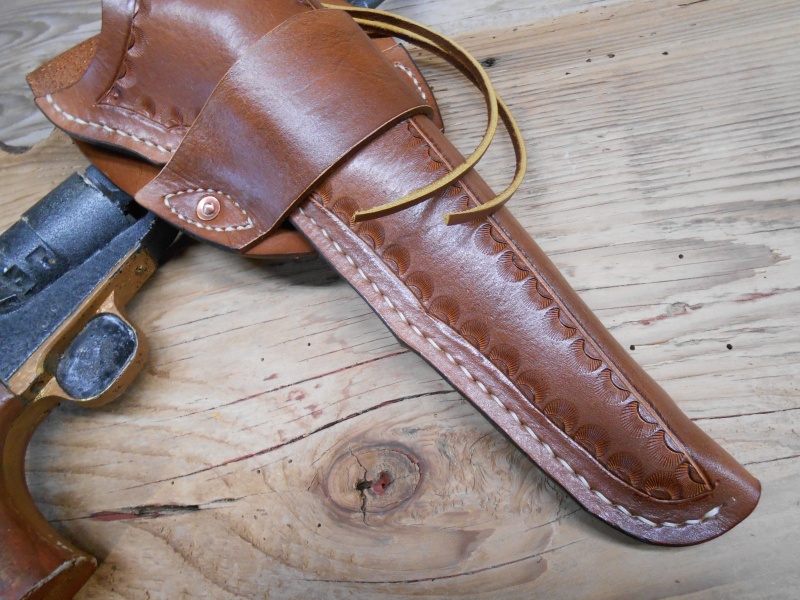
I found an image of this unusual Mexican Loop holster on the net somewhere. So, I thought I’d make one to see how it actually looked first hand. Then, I found a pattern on the Tandy Leather Compay website that looked very similar. This style has has a sewn and riveted loop instead of the traditional cut loop. Some call this style the “Dodge City” holster.
Fits:
1851 Colt Navy
1861 Colt Navy
1860 Colt Army
1858 Remington New Army
Ruger Vaquero
1873 Colt Single Action Army
Smith and Wesson American
1875 Remington
And everything that looks like the above.
Maker T.W. Ballstardt – Custom Leather
This holster is made from 8-9 oz vegetable tanned leather.
Unlined.
The holster has a large belt opening to fit over bullet loops. Fits 3 inch belts.
Props not included in sale
I hand make every one as they are ordered…one at a time the old fashioned way.
Please note: As these are made from natural range cattle hides, they may have various features such as barbed wire nicks, insect bites and if you are very luck – brands on the item.
Flat Rate Shipping !
- Satisfaction Guaranteed
- No Hassle Refunds
- Secure Payments
Description
The Mexican Loop Holster
Originating in the 1870s, the Mexican Loop holster, also known as the El Paso Loop holster, was another popular cowboy design. Saddlemakers fashioned these holsters from a single piece of leather, often from salvaged saddle fenders.
The craftsman folded half the leather piece to make a sandwich with a contoured side edge stitched to form a pouch for the pistol to ride in. The other half of the leather swatch was folded behind the pocket to create a skirt. The skirt was slashed through the middle several times to form straps, and the pouch was pushed through the straps to form a more tight-fitting holster.
A lawman, outlaw, or simple cattle hand could slide a belt through the loop at the top of the holster so the pistol rode high on the horseman’s belt rather than hanging below it.
A cowboy’s holster rarely matched his belt. It wasn’t until after the Civil War when cartridge revolvers replaced cap-and-ball pistols, that leather workers began stitching loops into belts for shooters to store extra cartridges. The West was well on its way to being tamed before the iconic gun leather rig we tend to associate with cowboy shootouts finally made its debut on the wild frontier.
Related products
-
2-1/2 Inch Tapered Gun Belt [SL-1839]
Price range: $105.00 through $145.00Select options This product has multiple variants. The options may be chosen on the product page -
![Fast Draw Holster - Colt SAA - Border Tooled [SL-1021]](https://www.swedesleatherworks.com/wp-content/uploads/DSCN4826-800x-300x300.jpg)
Fast Draw Holster – Colt SAA – Border Tooled [SL-1021]
Price range: $68.00 through $87.00Select options This product has multiple variants. The options may be chosen on the product page -
![Single Action Colt SAA Holster and Clones [SL-1024]](https://www.swedesleatherworks.com/wp-content/uploads/DSCN5161-800x-300x300.jpg)
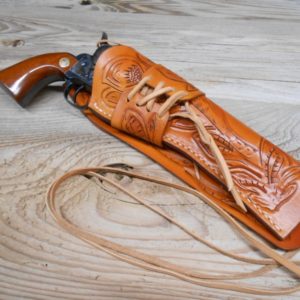
Single Action Colt SAA Holster and Clones [SL-1024]
Price range: $88.00 through $104.00Select options This product has multiple variants. The options may be chosen on the product page -
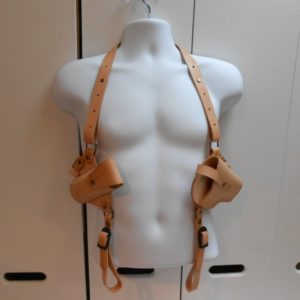
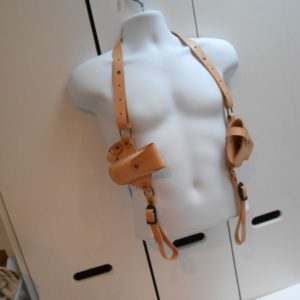
Spider Shoulder Holster – Harness [SL-1001]
$178.00Select options This product has multiple variants. The options may be chosen on the product page